
CHAPATHI
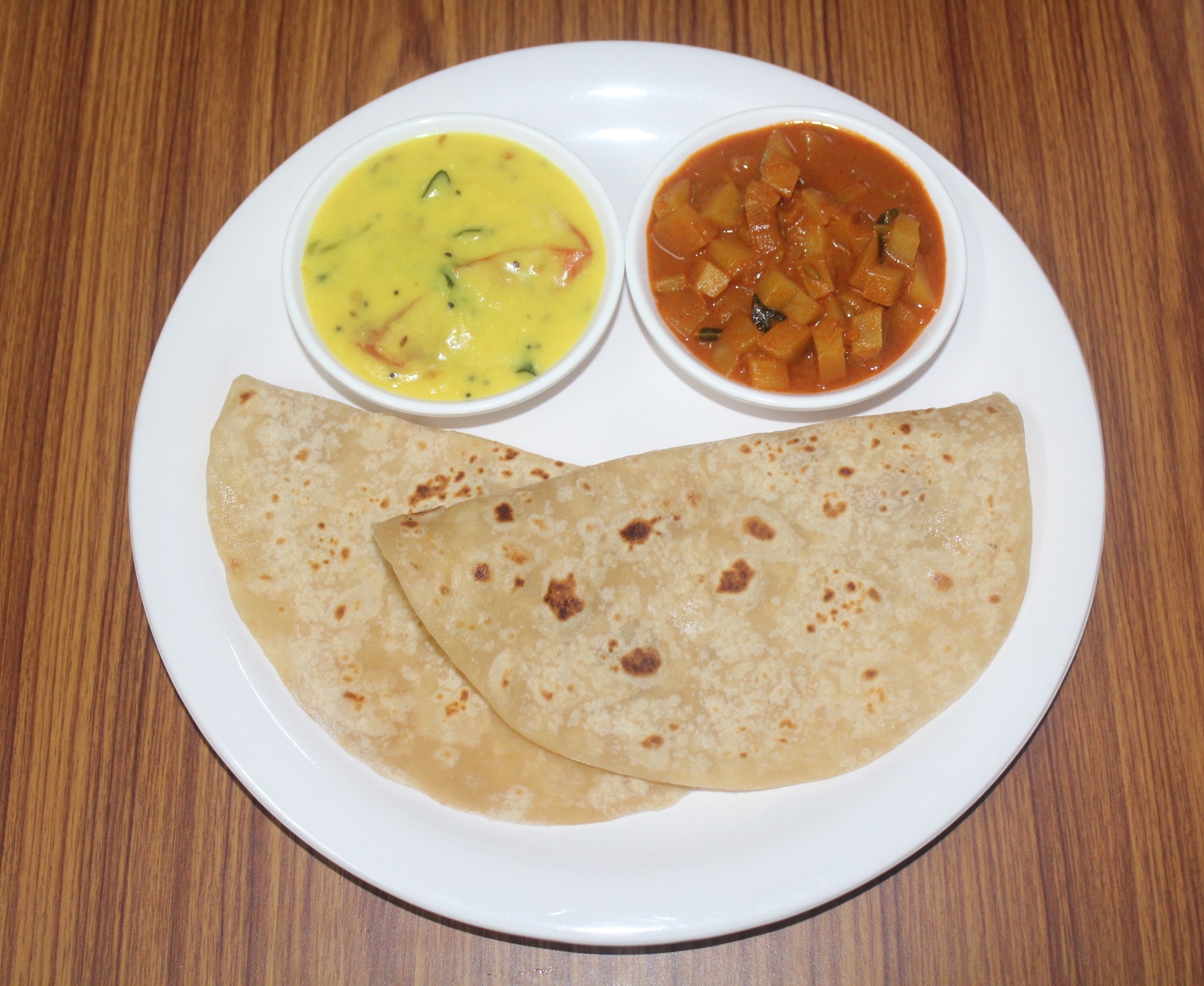
Jump to RecipeChapathi is a traditional unleavened flatbread widely eaten in India and across South Asia. It is usually made from whole wheat flour (atta), water and a little salt, then rolled into thin circles and cooked on a hot flat griddle called a tawa. It is soft and thin with a slightly chewy texture.
Chapathi is a staple food in many Indian households, especially in northern and central regions. It is often prepared fresh for lunch or dinner and is considered a healthier alternative to many refined-flour breads. It is typically served hot and commonly eaten with vegetable curries, lentils, meat dishes or yogurt.
ABOUT THE RECIPE:
Chapathi should have a soft and slightly chewy texture to it. I usually add little extra oil to the flour while preparing the dough. This helps to maintain the softness for a long time. Also, the dough doesn’t really have to be kneaded for a long time.
This recipe makes around 7~8 medium size chapathi.
INGREDIENTS FOR CHAPATHI:
- WHOLE WHEAT FLOUR – 3 CUPS + 1/2 CUP (FOR DUSTING)
- OIL – 4~5 TBSP
- SALT – AS REQUIRED
HOW TO MAKE CHAPATHI:
- In a mixing bowl, add 3 cups of whole wheat flour, 4~5 tbsp of oil and salt.

- Add little water at a time and mix it to a thick dough.

- Transfer it to work surface, and knead it for 1 minute. After 1 minute, dough will have a soft, thick and non sticky texture to it.

- Transfer it to the mixing bowl, cover the dough with a wet damp cloth, and let it rest for about 30 minutes.

- After 30 minutes, knead the dough once, and divide it into 7 to 8 equal portions. Keep them covered until use.

- Take one portion of the dough, and dust some dry flour over it.

- Place the dough on a rolling mat, and roll it thin. It should be thin and not too thin.

- Repeat the process with the remaining portions of the dough.

- Heat a tawa, and add the rolled dough to it. Maintain the flame at medium-high. Let it cook on one side for about 15 seconds, and then turn it.

- Cook for another 15 seconds on other side and then turn it.

- Apply little oil and turn them at definite intervals. Cook it until it is completely cooked on both sides.

- Once it is completely cooked through, transfer it to a plate.

- Repeat the process with the remaining rolled dough.
YUMMY AND DELICIOUS CHAPATHI IS READY.
SERVE IT WITH ANY VEGETABLE CURRIES, LENTILS, MEAT DISHES OR YOGURT.
I HAD CHAPATHI WITH BOMBAY CHUTNEY AND SAGU.

PRO TIPS:
- Warm water can also be added while kneading the dough but, I’ve added normal room temperature water. Room temperature water works well for me.
- Rolling the dough to a perfect shape comes with practice.
- Kneading the dough for 1 minute is more than enough for a soft chapathi.
- Adding oil to the flour is mandatory since, it helps to make soft chapathi.
- Add little oil (just a drop) while cooking the chapathi. Adding too much of oil might make it hard.
- After removing the cooked chapathi from the pan, apply little ghee or oil on top of it. This might help to keep the chapathi softer for a long time, especially when packing it for lunch.
- Layer chapathi on top of each other and wrap it with a cloth, preferably cotton or muslin cloth. This helps to maintain the softness for a long time.
NOTE:
Not all brands of atta will give this perfect soft chapathi. It is little tricky to find the perfect brand. Even I’ve tried so many different brands and, this is the one that worked for me.
The other brands that I’ve used, makes the chapathi hard. In that case, Instead of throwing it away, I usually add little maida (For 2 cups of flour add 1/2~1 cup of maida) to make the dough softer. Maida helps to soften the texture of the chapathi.
*ONCE YOU MAKE CHAPATHI, THE PAN CANNOT BE USED TO MAKE DOSA. SO, IT IS BETTER TO HAVE A SEPARATE PAN FOR CHAPATHI.

CHAPATHI
Course: BREAKFAST, LUNCH, DINNER, MAIN COURSECuisine: INDIAN4
servings45
minutes15
minutes60~70
kcalChapathi is a traditional unleavened flatbread widely eaten in India and across South Asia. It is usually made from whole wheat flour (atta), water and a little salt, then rolled into thin circles and cooked on a hot flat griddle called a tawa. It is soft and thin with a slightly chewy texture.
Chapathi is a staple food in many Indian households, especially in northern and central regions. It is often prepared fresh for lunch or dinner and is considered a healthier alternative to many refined-flour breads. It is typically served hot and commonly eaten with vegetable curries, lentils, meat dishes or yogurt.
Ingredients
WHOLE WHEAT FLOUR – 3 CUPS + 1/2 CUP (FOR DUSTING)
OIL – 4~5 TBSP
SALT – AS REQUIRED
Directions
- In a mixing bowl, add 3 cups of whole wheat flour, 4~5 tbsp of oil and salt.
- Add little water at a time and mix it to a thick dough.
- Transfer it to work surface, and knead it for 1 minute. After 1 minute, dough will have a soft, thick and non sticky texture to it.
- Transfer it to the mixing bowl, cover the dough with a wet damp cloth, and let it rest for about 30 minutes.
- After 30 minutes, knead the dough once, and divide it into 7 to 8 equal portions. Keep them covered until use.
- Take one portion of the dough, and dust some dry flour over it.
- Place the dough on a rolling mat, and roll it thin. It should be thin and not too thin.
- Repeat the process with the remaining portions of the dough.
- Heat a tawa, and add the rolled dough to it. Maintain the flame at medium-high. Let it cook on one side for about 15 seconds, and then turn it.
- Cook for another 15 seconds on other side and then turn it.
- Apply little oil and turn them at definite intervals. Cook it until it is completely cooked on both sides.
- Once it is completely cooked through, transfer it to a plate.
- Repeat the process with the remaining rolled dough.
- YUMMY AND DELICIOUS CHAPATHI IS READY.
Notes
- PRO TIPS:
Warm water can also be added while kneading the dough but, I’ve added normal room temperature water. Room temperature water works well for me.
Rolling the dough to a perfect shape comes with practice.
Kneading the dough for 1 minute is more than enough for a soft chapathi.
Adding oil to the flour is mandatory since, it helps to make soft chapathi.
Add little oil (just a drop) while cooking the chapathi. Adding too much of oil might make it hard.
After removing the cooked chapathi from the pan, apply little ghee or oil on top of it. This might help to keep the chapathi softer for a long time, especially when packing it for lunch.
Layer chapathi on top of each other and wrap it with a cloth, preferably cotton or muslin cloth. This helps to maintain the softness for a long time. - NOTE:
Not all brands of atta will give this perfect soft chapathi. It is little tricky to find the perfect brand. Even I’ve tried so many different brands and, this is the one that worked for me.
The other brands that I’ve used, makes the chapathi hard. In that case, Instead of throwing it away, I usually add little maida (For 2 cups of flour add 1/2~1 cup of maida) to make the dough softer. Maida helps to soften the texture of the chapathi. - *ONCE YOU MAKE CHAPATHI, THE PAN CANNOT BE USED TO MAKE DOSA. SO, IT IS BETTER TO HAVE A SEPARATE PAN FOR CHAPATHI.