
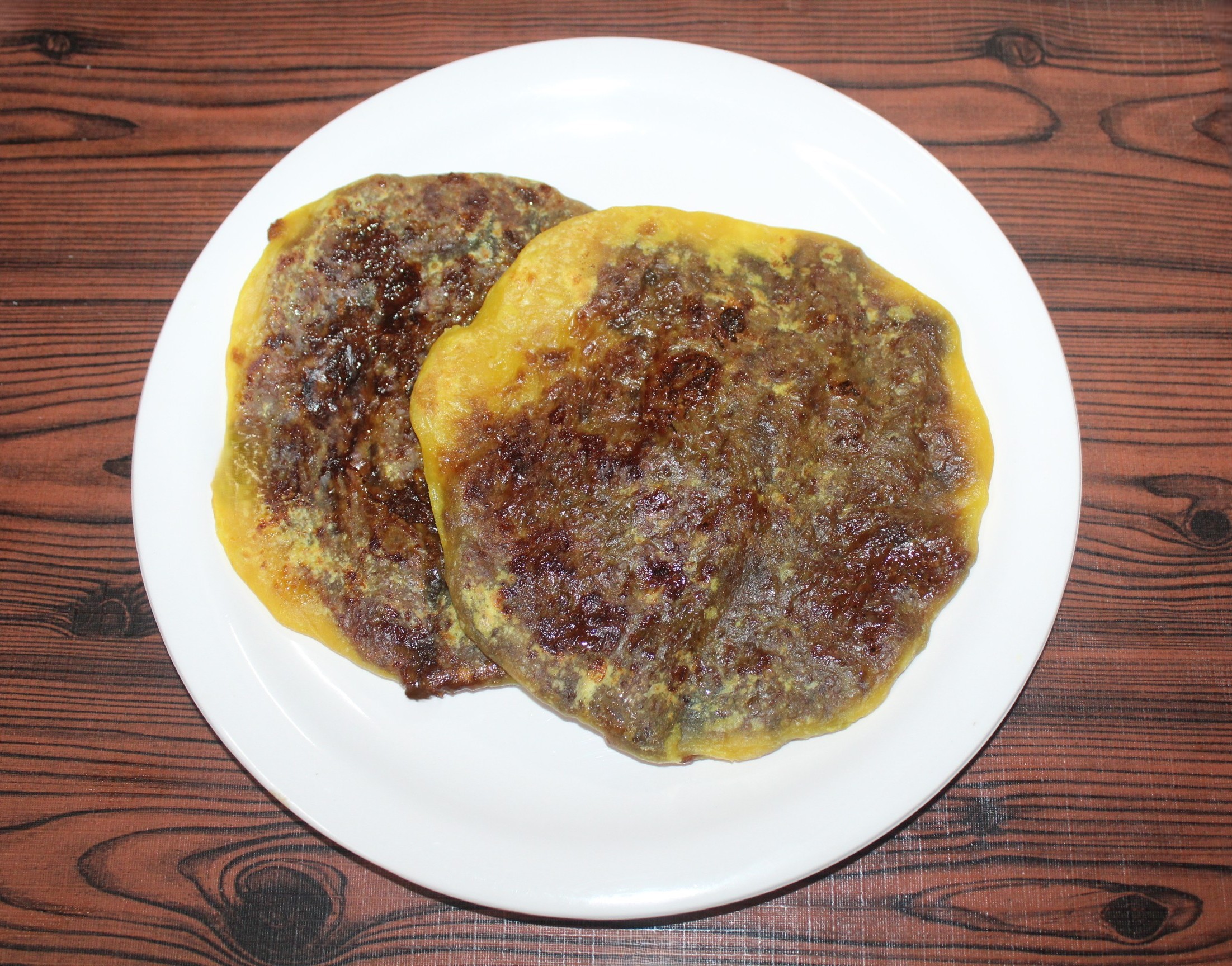
THENGAI POLI
Jump to RecipePoli is a traditional sweet flatbread popular in South India, especially in Tamil Nadu, Karnataka, Andhra Pradesh and Maharashtra. It is a soft, thin flatbread made from maida, stuffed with a sweet filling, also known as obbattu, holige, paruppu poli or puran poli.
The sweet filling is usually made with channa dal and jaggery flavoured with cardamom powder. Other variation of this poli use coconut, instead of channa dal along with jaggery and cardamom powder. The variation made with coconut is called as Thengai poli.
Thengai poli is a version of Poli, where “thengai” means coconut in Tamil. It’s especially popular in Tamil Nadu during festivals and special occasions. The stuffing is made by cooking grated coconut with jaggery, cardamom powder and a dollop of ghee, which is then stuffed into the soft dough, rolled and cooked on a hot tawa or skillet. It has a soft and slightly crisp texture outer layer, with a juicy, sweet and mildly chewy inner filling.
ABOUT THE RECIPE:
Thengai poli can be made only with freshly grated coconut or frozen grated coconut. Do not use dessicated coconut or coconut flakes for this recipe. Dessicated coconut or any other dehydrated coconut will ooze out oil while cooking, which spoils the taste of the recipe.
Regular jaggery or jaggery powder can be used for this recipe. I’ve used jaggery powder for this recipe. Jaggery powder is darker in color compared to regular jaggery. Thengai poli available in shops are usually made with regular jaggery, and has a light color to it. Using jaggery powder might change its color, but won’t alter the taste, texture and flavour of the recipe.
INGREDIENTS FOR THENGAI POLI:
FOR THE DOUGH:
- MAIDA – 3 CUPS
- TURMERIC POWDER – 1/2 TSP
- OIL – 1/2 CUP
- SALT – 1/4 TSP

FOR THE STUFFING:
- GRATED COCONUT – 2 CUP
- JAGGERY POWDER – 1 CUP
- CARDAMOM POWDER – 1/2 TSP
- GHEE – 1 TSP
FOR COOKING POLI:
- OIL / GHEE – 1/4 CUP

HOW TO MAKE THENGAI POLI:
HOW TO PREPARE THE DOUGH FOR POLI:
- In a large mixing bowl, add 3 cups of flour, 1/2 tsp of turmeric powder and 1/4 tsp of salt.

- Add water and mix it to a soft and sticky dough.

- Add 2 tbsp of oil to it and start to mix the dough. It will start to form a soft non-stick dough.

- Mix it until it becomes smooth, and doesn’t stick to the sides or to your hands.

- Once you get the soft non-sticky dough, add the remaining oil (around 1/4 cup) to it. Cover it and let it rest for 30 minutes.

HOW TO PREPARE THE STUFFING FOR THENGAI POLI:
- In a kadai, add 1 cup of jaggery powder and 1/4 cup of water.

- Turn on the flame, and place the kadai over the stove. Stir it continuously. The jaggery will melt completely and starts to boil.

- At this stage, add 2 cups of grated coconut to it.

- Mix it well. Add 1/2 tsp of cardamom powder to it, and mix it well.

- Cook on medium-low flame until it becomes thick. Do not let it dry completely. It should be soft, and not too hard.

- Add 1 tsp of ghee to it, and mix it well.

- Once it becomes thick, turn off the flame.
*Take a portion of the stuffing and try to roll it. It should be soft and slightly stick. This is the perfect consistency. The jaggery might harden a little bit when it cools down. When it cools down, the stuffing will become soft and non-sticky, perfect to be used as a filling.

- Let the stuffing cool down completely.
HOW TO MAKE THENGAI POLI:
- After 30 minutes of resting, mix the dough and divide it into 5 or 6 equal proportions. This recipe makes around 6 medium size thengai poli.

- On a banana leaf or parchment paper, place a single portion of the dough and spread it. Spread it using hands and do not use any roller. Apply little oil to your hands and on banana leaf. This helps to roll the dough easily. The oil used for soaking the dough can be used.

- Roll the dough to a 4″ to 5″ diameter, and place a small portion of the cooked coconut filling on to the dough.

- Cover the filling with the rolled dough. Make sure the filling is completely covered.

- Gently press it on all sides. It should be round and slightly thick. Do not press it too hard. The filling might come out.

- Heat a pan or tawa, and add the pressed dough to it along with the banana leaf. The pressed dough should face the pan.

- Gently remove the banana leaf from the dough. The pressed dough will stick to the hot tawa.

- Maintain the flame at medium-low. Let it cook for 1 minute, and then flip it.
- Add little ghee on top, and cook it until it turns light golden brown in color.

- Once it turns light golden brown in color on both sides, transfer it to a plate.
- Repeat the process with the remaining dough and filling.
YUMMY AND DELICIOUS THENGAI POLI IS READY.

PRO TIPS:
- The dough should be soft and sticky. Hard dough will tastes like stuffed paratha.
- After adding oil, the dough should be mixed until it becomes soft and non-sticky.
- Resting the dough with oil will make it soft and stretchy.
- The dough should be rested for at least 30 minutes to get the perfect texture.
- The stuffing should be at the perfect consistency. It should be soft and has to hold its shape while rolled.
- After turning off the flame, take a portion of the stuffing and try to roll it. It should be soft and slightly stick. This is the perfect consistency. The jaggery might harden a little bit when it cools down. When it cools down, the stuffing will become soft and non-sticky, perfect to be used as a filling.
- Use banana leaf or parchment paper for rolling the dough.
- Gently press the dough with hands. Do not use any roller.
- Apply little oil to your hands and on banana leaf. This helps to roll the dough easily. The oil used for soaking the dough can be used.
- The rolled dough can’t be removed from the banana leaf/parchment paper and placed on the tawa. It should be added along with the parchment paper or banana leaf to the tawa.
NOTE:
Thengai poli can be stored at room temperature for about 2 to 3 days. Store it in a dry, airtight container, and add parchment paper between each poli to prevent it from sticking to each other.

THENGAI POLI
Course: DessertCuisine: SOUTH INDIAN6
servings45
minutes45
minutes300
kcalPoli is a traditional sweet flatbread popular in South India, especially in Tamil Nadu, Karnataka, Andhra Pradesh and Maharashtra. It is a soft, thin flatbread made from maida, stuffed with a sweet filling, also known as obbattu, holige, paruppu poli or puran poli.
The sweet filling is usually made with channa dal and jaggery flavoured with cardamom powder. Other variation of this poli use coconut, instead of channa dal along with jaggery and cardamom powder. The variation made with coconut is called as Thengai poli.
Thengai poli is a version of Poli, where “thengai” means coconut in Tamil. It’s especially popular in Tamil Nadu during festivals and special occasions. The stuffing is made by cooking grated coconut with jaggery, cardamom powder and a dollop of ghee, which is then stuffed into the soft dough, rolled and cooked on a hot tawa or skillet. It has a soft and slightly crisp texture outer layer, with a juicy, sweet and mildly chewy inner filling.
Ingredients
FOR THE DOUGH:
MAIDA – 3 CUPS
TURMERIC POWDER – 1/2 TSP
OIL – 1/2 CUP
SALT – 1/4 TSP
FOR THE STUFFING:
GRATED COCONUT – 2 CUP
JAGGERY POWDER – 1 CUP
CARDAMOM POWDER – 1/2 TSP
GHEE – 1 TSP
FOR COOKING POLI:
OIL / GHEE – 1/4 CUP
Directions
- HOW TO PREPARE THE DOUGH FOR POLI:
- In a large mixing bowl, add 3 cups of flour, 1/2 tsp of turmeric powder and 1/4 tsp of salt.
- Add water and mix it to a soft and sticky dough.
- Add 2 tbsp of oil to it and start to mix the dough. It will start to form a soft non-stick dough.
- Mix it until it becomes smooth, and doesn’t stick to the sides or to your hands.
- Once you get the soft non-sticky dough, add the remaining oil (around 1/4 cup) to it. Cover it and let it rest for 30 minutes.
- HOW TO PREPARE THE STUFFING FOR THENGAI POLI:
- In a kadai, add 1 cup of jaggery powder and 1/4 cup of water.
- Turn on the flame, and place the kadai over the stove. Stir it continuously. The jaggery will melt completely and starts to boil.
- At this stage, add 2 cups of grated coconut to it.
- Mix it well. Add 1/2 tsp of cardamom powder to it, and mix it well.
- Cook on medium-low flame until it becomes thick. Do not let it dry completely. It should be soft, and not too hard.
- Add 1 tsp of ghee to it, and mix it well.
- Once it becomes thick, turn off the flame.
- *Take a portion of the stuffing and try to roll it. It should be soft and slightly stick. This is the perfect consistency. The jaggery might harden a little bit when it cools down. When it cools down, the stuffing will become soft and non-sticky, perfect to be used as a filling.
- Let the stuffing cool down completely.
- HOW TO MAKE THENGAI POLI:
- After 30 minutes of resting, mix the dough and divide it into 5 or 6 equal proportions. This recipe makes around 6 medium size thengai poli.
- On a banana leaf or parchment paper, place a single portion of the dough and spread it. Spread it using hands and do not use any roller. Apply little oil to your hands and on banana leaf. This helps to roll the dough easily. The oil used for soaking the dough can be used.
- Roll the dough to a 4″ to 5″ diameter, and place a small portion of the cooked coconut filling on to the dough.
- Cover the filling with the rolled dough. Make sure the filling is completely covered.
- Gently press it on all sides. It should be round and slightly thick. Do not press it too hard. The filling might come out.
- Heat a pan or tawa, and add the pressed dough to it along with the banana leaf. The pressed dough should face the pan.
- Gently remove the banana leaf from the dough. The pressed dough will stick to the hot tawa.
- Maintain the flame at medium-low. Let it cook for 1 minute, and then flip it.
- Add little ghee on top, and cook it until it turns light golden brown in color.
- Once it turns light golden brown in color on both sides, transfer it to a plate.
- Repeat the process with the remaining dough and filling.
- YUMMY AND DELICIOUS THENGAI POLI IS READY.
Notes
- PRO TIPS:
The dough should be soft and sticky. Hard dough will tastes like stuffed paratha.
After adding oil, the dough should be mixed until it becomes soft and non-sticky.
Resting the dough with oil will make it soft and stretchy.
The dough should be rested for at least 30 minutes to get the perfect texture.
The stuffing should be at the perfect consistency. It should be soft and has to hold its shape while rolled.
After turning off the flame, take a portion of the stuffing and try to roll it. It should be soft and slightly stick. This is the perfect consistency. The jaggery might harden a little bit when it cools down. When it cools down, the stuffing will become soft and non-sticky, perfect to be used as a filling.
Use banana leaf or parchment paper for rolling the dough.
Gently press the dough with hands. Do not use any roller.
Apply little oil to your hands and on banana leaf. This helps to roll the dough easily. The oil used for soaking the dough can be used.
The rolled dough can’t be removed from the banana leaf/parchment paper and placed on the tawa. It should be added along with the parchment paper or banana leaf to the tawa. - NOTE:
Thengai poli can be stored at room temperature for about 2 to 3 days. Store it in a dry, airtight container, and add parchment paper between each poli to prevent it from sticking to each other.